Loading…
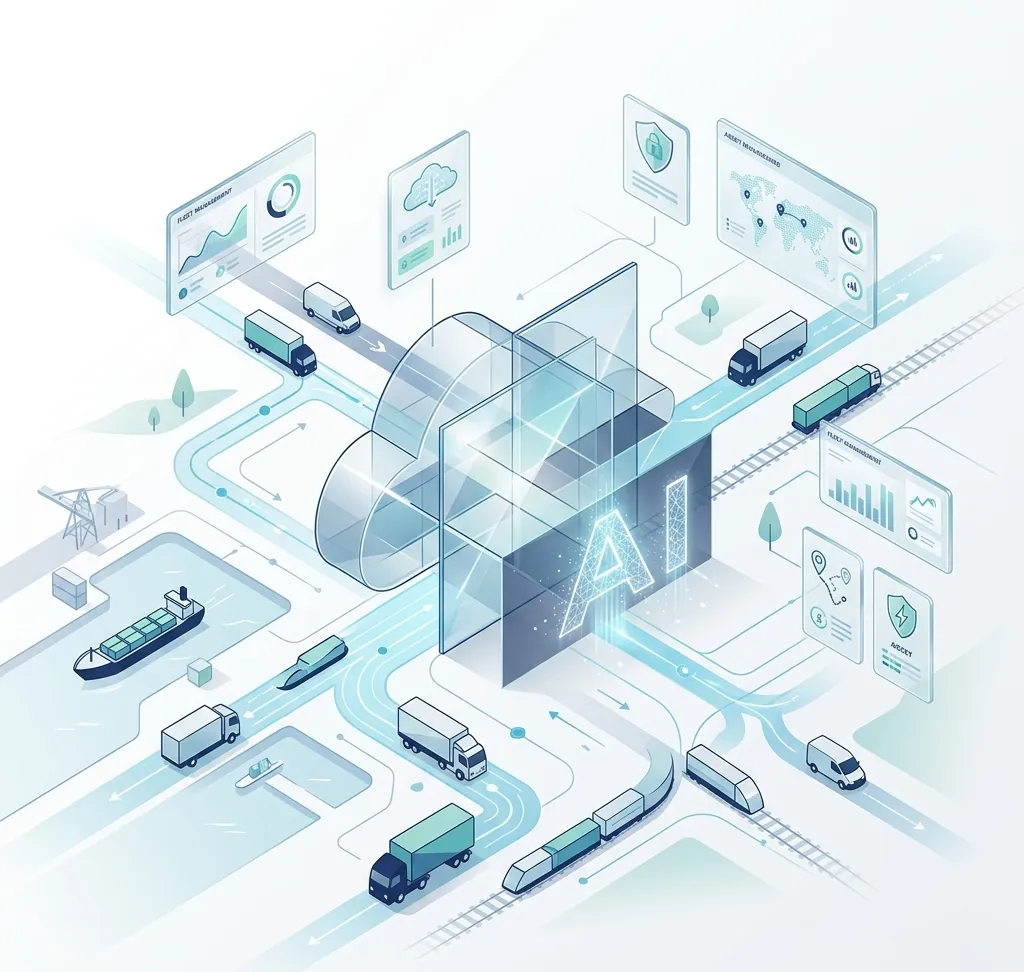
The Context Shaping Logistics & Supply Chain
Understanding the macro trends and digital priorities driving the need for AI transformation in your sector.
Industry Trends
- Nearshoring and supply chain diversification to mitigate global risks
- Rise of omnichannel fulfillment and ultra-fast delivery expectations
- Integration of autonomous vehicles and drones in logistics networks
- Emphasis on sustainable and carbon-neutral supply chains
Digital Priorities
- Establishing end-to-end supply chain visibility (control towers)
- Automating warehouse operations with robotics and AI
- Digitizing freight matching and brokerage
- Enhancing reverse logistics and returns management
AI Maturity
The logistics sector is rapidly adopting AI to handle complex, dynamic networks. Leading firms are utilizing AI for predictive ETAs and dynamic routing, moving beyond descriptive analytics to prescriptive supply chain management.
The Challenges Shaping the Future of Logistics & Supply Chain
Strategic barriers preventing organizations from scaling effectively, which AI is uniquely positioned to solve.
Supply Chain Disruptions
Navigating unpredictable events like geopolitical tensions, natural disasters, and port congestions.
Last-Mile Inefficiencies
Managing the most expensive and complex leg of the delivery journey.
Labor Shortages
Struggling to find and retain warehouse workers and qualified commercial drivers.
Data Silos
Integrating data across diverse partners, carriers, and legacy systems.
Where AI Creates the Greatest Business Impact
How enterprise AI capabilities directly address your core challenges to unlock new value and operational efficiency.
Predictive Logistics
Anticipating delays and rerouting shipments proactively.
Autonomous Operations
Leveraging robotics and AVs to augment the workforce and increase throughput.
Inventory Optimization
Reducing carrying costs while preventing stockouts through AI-driven forecasting.
Sustainable Routing
Minimizing fuel consumption and carbon footprint via optimized path planning.
High-Value AI Use Cases Across the Logistics & Supply Chain Value Chain
Proven applications driving measurable business value, efficiency, and transformation in Logistics & Supply Chain.
1Dynamic Route Optimization
The Problem
Static routing fails to account for real-time traffic, weather, and delivery windows, leading to missed SLAs and high fuel costs.
The Outcome
Reduces fuel consumption by 10-15% and improves on-time delivery rates.
Example Workflow
AI algorithms continuously recalculate the optimal path for delivery fleets based on live traffic feeds, weather data, and package priority.
2Predictive ETA for Freight
The Problem
Lack of visibility into shipment arrival times causes bottlenecks at distribution centers and dissatisfied end-customers.
The Outcome
Improves ETA accuracy by up to 50%, enabling better dock scheduling.
Example Workflow
Machine learning models analyze historical transit times, vessel AIS data, and port congestion metrics to predict precise arrival times for global ocean freight.
3Warehouse Robotics Orchestration
The Problem
Uncoordinated AMRs (Autonomous Mobile Robots) and human workers lead to warehouse traffic jams and inefficient picking.
The Outcome
Increases picking throughput by 30% and reduces warehouse accidents.
Example Workflow
AI-powered fleet management software acts as a control tower, dynamically assigning tasks and routing robots to avoid collisions and optimize workflow.
4Demand Sensing and Forecasting
The Problem
Traditional forecasting relying on historical sales data fails to capture sudden shifts in consumer demand.
The Outcome
Reduces forecast error by 20% and lowers safety stock requirements.
Example Workflow
Deep learning models ingest macroeconomic indicators, social media trends, and local weather forecasts to predict short-term demand surges.
5Automated Freight Brokerage
The Problem
Manual matching of shippers with available carrier capacity is slow, inefficient, and often results in empty miles.
The Outcome
Increases load matching speed by 80% and reduces empty miles by 15%.
Example Workflow
Natural language processing extracts load details from emails, while reinforcement learning algorithms instantly price and match loads to the optimal carrier.
6Computer Vision for Quality Control
The Problem
Manual inspection of inbound and outbound pallets is error-prone and labor-intensive.
The Outcome
Identifies 99% of damaged goods before shipping, reducing costly returns.
Example Workflow
High-speed cameras and AI models inspect packages on conveyor belts in real-time, flagging damaged boxes or missing labels.
7Predictive Maintenance for Fleets
The Problem
Unexpected vehicle breakdowns disrupt supply chains and incur high emergency repair costs.
The Outcome
Reduces fleet downtime by 20% and extends vehicle life.
Example Workflow
Telematics data (engine temperature, braking patterns) is analyzed by AI to predict component failures and schedule preventative maintenance.
8Inventory Allocation Optimization
The Problem
Misplaced inventory across a network of fulfillment centers leads to expensive cross-shipping or stockouts.
The Outcome
Reduces fulfillment costs by 10% and improves next-day delivery coverage.
Example Workflow
AI determines the optimal placement of SKUs across regional distribution centers based on predicted hyper-local demand patterns.
9Reverse Logistics Triage
The Problem
Processing high volumes of returns is manual and expensive, leading to value degradation of returned goods.
The Outcome
Accelerates return processing time by 40% and maximizes resale recovery value.
Example Workflow
Computer vision and NLP analyze customer return reasons and item condition to automatically route the product for restock, liquidation, or recycling.
10Supply Chain Risk Management
The Problem
Companies are often caught off guard by supplier bankruptcies, natural disasters, or geopolitical events.
The Outcome
Provides early warnings of disruptions, allowing weeks of lead time for mitigation.
Example Workflow
AI tools monitor global news feeds, financial data, and weather alerts to map and score the risk exposure of every node in the supply chain.
11Smart Contract Execution
The Problem
Disputes over delivery times, damage, and billing cause payment delays and friction between partners.
The Outcome
Reduces dispute resolution time from weeks to hours and automates billing.
Example Workflow
AI verifies IoT sensor data (e.g., temperature compliance for cold chain) against smart contracts to automatically trigger payments upon successful delivery.
12Carbon Emission Tracking and Reduction
The Problem
Companies struggle to accurately measure and reduce Scope 3 emissions across their logistics networks.
The Outcome
Provides auditable carbon accounting and identifies pathways for a 15% emission reduction.
Example Workflow
AI calculates granular emissions for every shipment based on vehicle type, load weight, and route, then recommends greener carrier alternatives.
Risk & Governance
Building Responsible and Trusted AI
Governance in logistics AI focuses on data standardization across partners, ensuring fair labor practices in automated environments, and compliance with international trade regulations. Synottic's Responsible AI frameworks ensure that your deployments meet critical standards for security, privacy, and fairness.
ISO 28000 (Specification for security management systems for the supply chain)
GDPR for driver and customer data privacy
Customs Trade Partnership Against Terrorism (CTPAT)
Emerging regulations on Autonomous Vehicle safety standards
How Synottic Helps
- 1
AI Readiness Audit
We assess your data infrastructure and governance posture against Logistics & Supply Chain regulatory standards.
- 2
Guardrails Implementation
Deploy enterprise guardrails to prevent data leakage, bias, and hallucination.
- 3
Continuous Monitoring
Automated drift detection and bias auditing for production models to ensure ongoing compliance.
Your Recommended AI Capability Journey
A structured capability-building roadmap tailored for Logistics & Supply Chain professionals, from foundational literacy to enterprise-scale AI implementation.
1
Phase 1
Build Foundations
Understand AI terminology, concepts, and responsible use cases specific to Logistics.
2
Phase 2
Develop Practical Skills
Master generative AI tools to improve daily productivity and communication in Logistics.
3
Phase 3
Apply AI
Apply AI to function-specific workflows, operations, and strategic planning within Logistics.
AI for Operations & Supply Chain
1 - 3 Days
Skills Acquired
- Understand AI concepts and practical applications in operations
- Use AI assistants to automate operational activities
- Improve demand forecasting and inventory planning
View Program
AI for Procurement
1 - 3 Days
Skills Acquired
- Understand AI concepts relevant to procurement and supply chain
- Apply Prompt Engineering to procurement workflows
- Generate procurement documentation, RFQs, RFPs and communications
View Program
4
Phase 4
Govern & Scale
Deploy and govern secure, agentic AI systems that comply with Logistics regulations.
5
Phase 5
Enterprise Capability
Scale AI adoption and build internal capability across your entire Logistics organization.
The Synottic Transformation Journey
A structured pathway from discovery through to continuous business value, ensuring lasting impact.
1
Discovery
2
Strategize
3
Enable
4
Govern
5
Deploy
6
Scale
How Synottic Helps You Succeed
End-to-end consulting and implementation services designed specifically for Logistics & Supply Chain.
AI Readiness Assessment
Measure organisational AI maturity and identify strategic capability gaps.
AI Strategy
Align AI initiatives with business goals and operational priorities to maximize ROI.
Executive Advisory
Support senior leaders with AI strategy and long-term transformation planning.
Capability Building
Train your workforce with tailored, role-based AI enablement programs.
Responsible AI & Governance
Establish policies, controls, and ethical frameworks to mitigate AI risks.
Agentic AI & Implementation
Design and deploy autonomous AI agents for complex enterprise processes.
Frequently Asked Questions
In the near term, AI is more likely to augment human workers. For example, it can optimize routes for drivers or use robots to handle heavy lifting in warehouses. While autonomous vehicles will eventually handle long-haul routes, human oversight and last-mile expertise will remain critical.