Loading…
Loading…

Experience across enterprise capability building, AI readiness, leadership enablement, workforce transformation, responsible AI, and practical adoption.
A capability-building engagement designed around the day-to-day work of HR and people teams — research, communication, content creation, and talent workflows — rather than generic AI orientation.
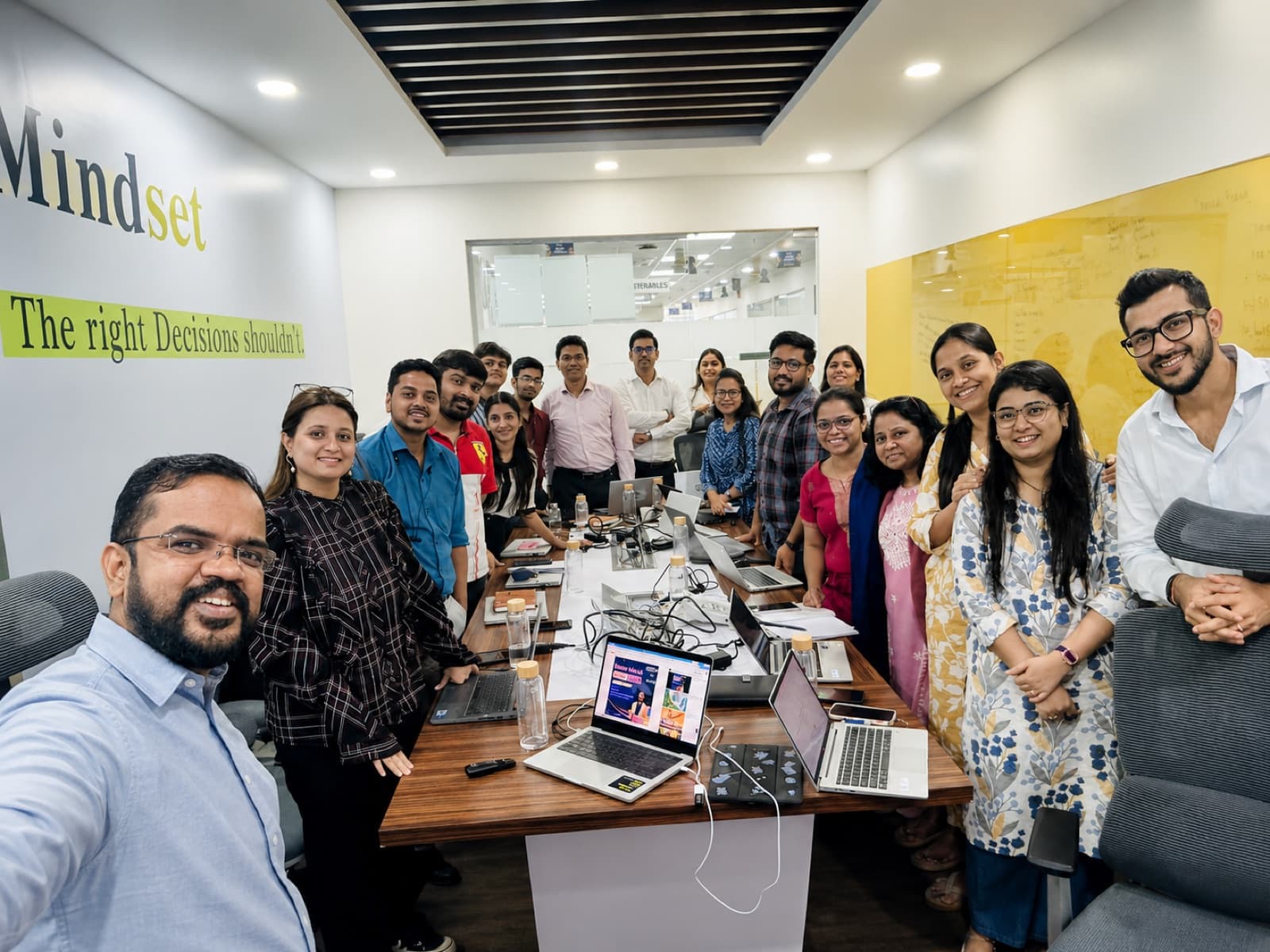
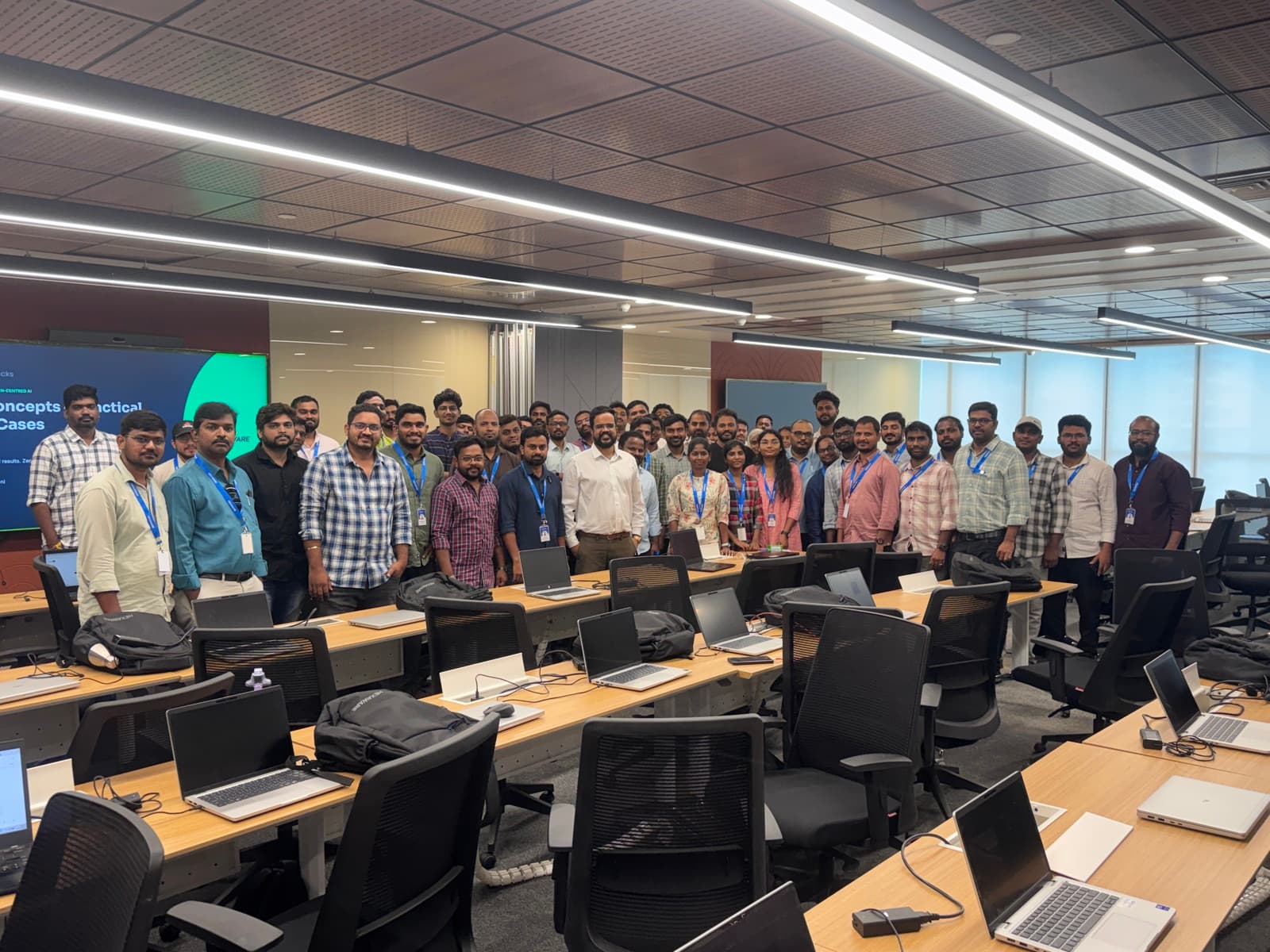
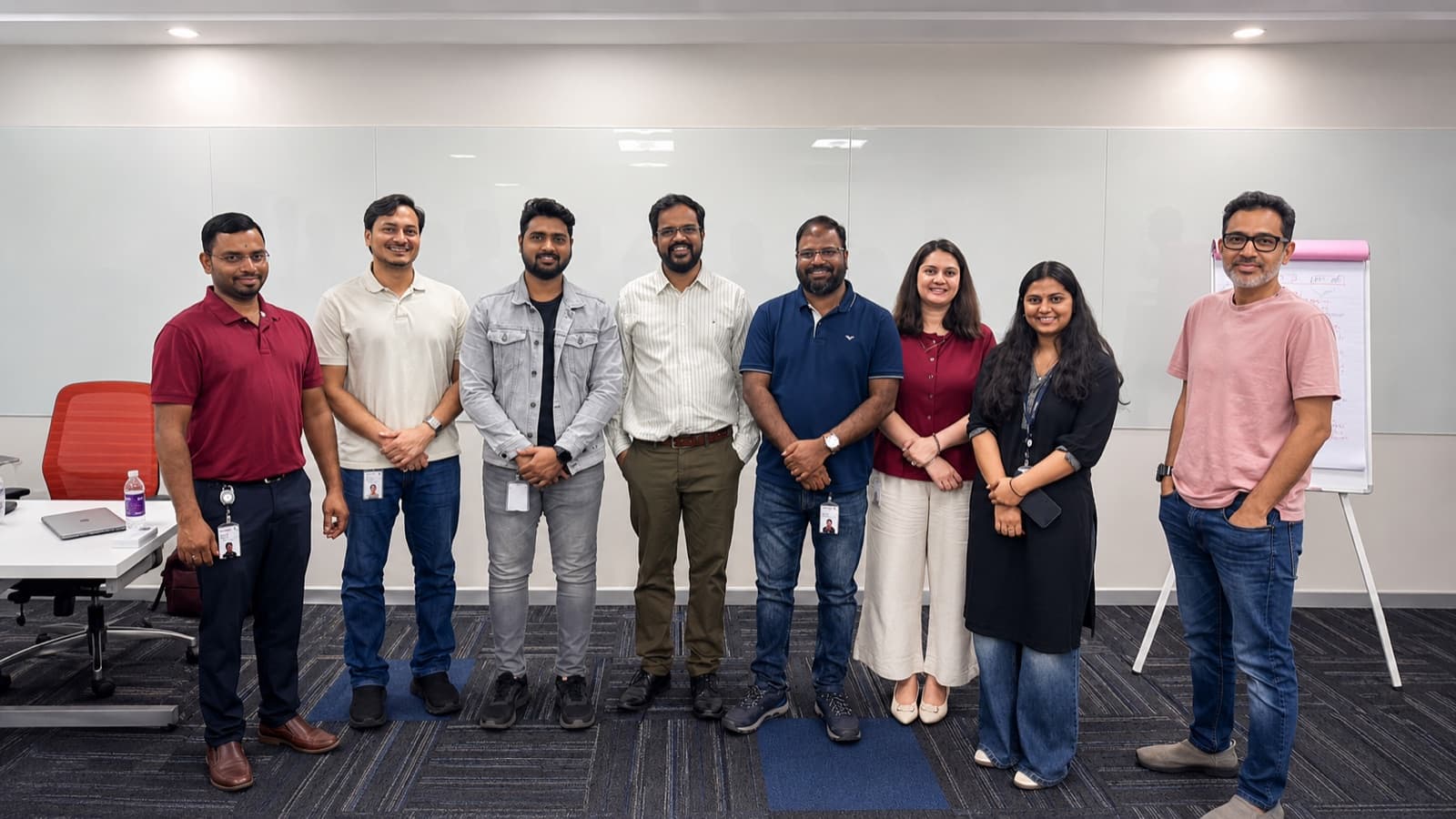
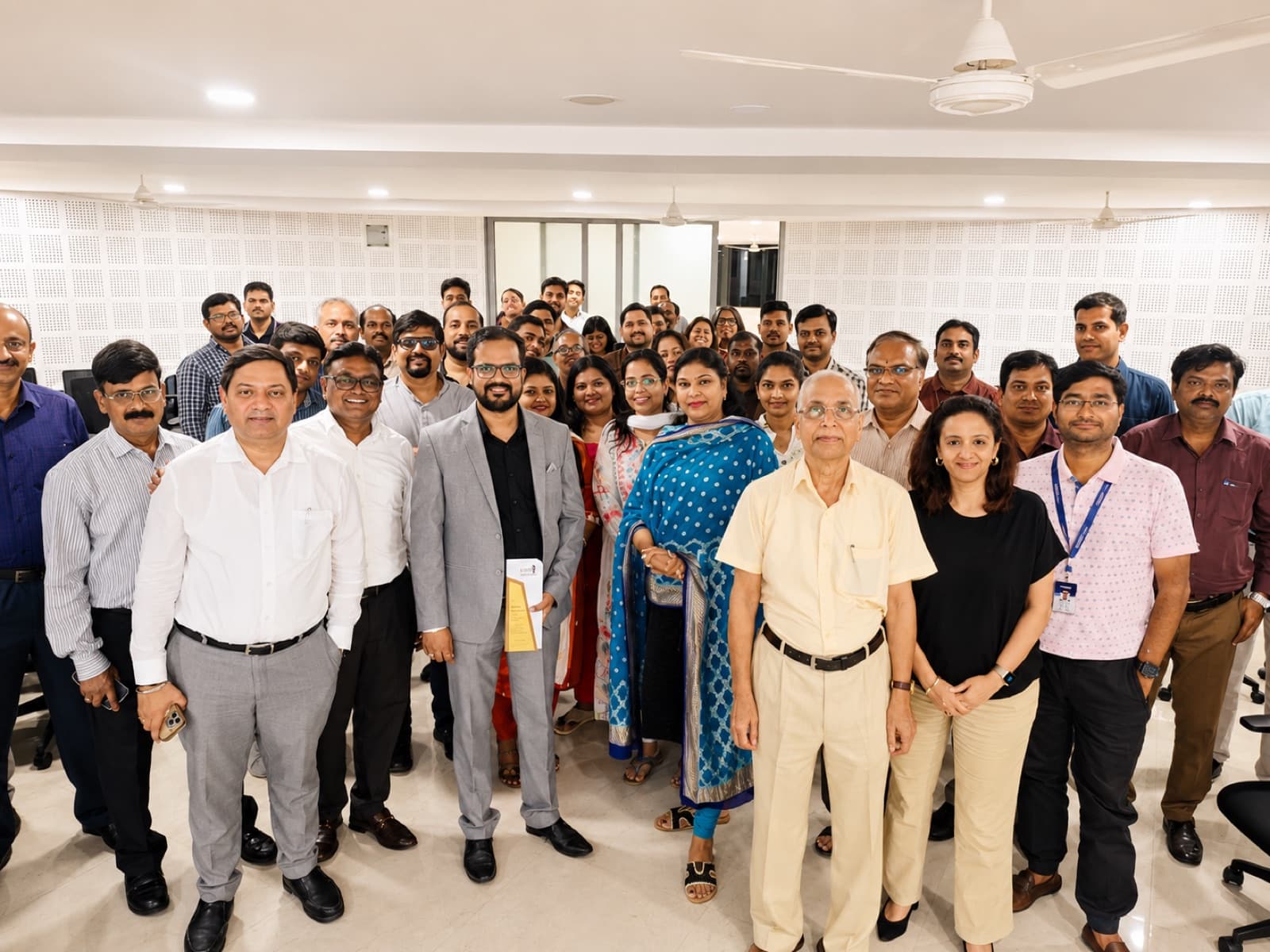
A Synottic AI capability session in progress.
HR and people teams are increasingly expected to use AI in their daily work — from research and communication to content creation and talent processes — while generative AI tools were already spreading informally across the function ahead of any structured guidance.
HR professionals needed a practical, role-relevant understanding of where AI genuinely helps in HR work, how to use it responsibly with sensitive people data, and how to move from occasional tool use to consistent, confident application in daily workflows.
Synottic designed a capability program around real HR workflows rather than generic AI literacy — grounded in the Human-Centred AI approach of starting with the work before the tool, and building judgment alongside skill.
The program treated HR judgment — on people decisions, sensitive data, and fairness — as the constant, and AI as the tool that supports it. Every practical activity paired a workflow with an explicit responsible-use consideration, rather than teaching tools in isolation from the judgment calls HR professionals actually have to make.

Different audiences. Different business contexts. One principle: AI capability becomes valuable when it connects to real work, responsible decisions, and practical application.
Select the challenge closest to yours to see relevant Synottic evidence, approach, and where to start.
Benchmark where your organization stands before committing to AI investment.
Building AI Readiness in a Knowledge-Intensive Pharma EnvironmentReal transformation work creates valuable questions. Research, assessments, and practitioner experience help us examine those questions more deeply — and we keep each source clearly labeled, rather than presenting observation as formal research.
Research conducted using a defined methodology.
Patterns derived from AI readiness and capability assessment data.
Observations from real-world engagement and professional practice.
Synottic interpretation and point of view.
Our work is guided by structured approaches that connect business priorities, human capability, governance, technology, and adoption.
We study how organizations around the world are approaching AI transformation and examine the strategic, human, governance, implementation, and adoption lessons enterprise leaders can apply. These are independent analyses of publicly reported work by other organizations — not Synottic engagements.
In early 2024, Klarna publicly stated that an AI customer service assistant, built on OpenAI's models, was handling a large share of customer service chats and doing the work of hundreds of full-time agent roles within its first month of full deployment.
It became one of the most cited examples of a customer-facing generative AI deployment moving from pilot to enterprise scale in months rather than years, and reignited debate about AI's effect on service-function workforce size.
The speed of scale is only half the story leaders should study. What made this workable was a narrow, well-bounded task (customer service resolution) with clear escalation paths to humans — not a general-purpose AI rollout. Human-Centred AI would ask what happened to the judgment and escalation layer, not just the headline efficiency number.
Source: Public company statements and business press coverage, 2024
Morgan Stanley worked with OpenAI to build a GPT-4-based assistant trained on the firm's own research and knowledge base to help financial advisors quickly retrieve and synthesize internal content during client conversations.
It's a widely referenced example of applying generative AI to high-stakes knowledge work in a regulated industry — where accuracy, source attribution, and human accountability matter as much as speed.
The core design choice — grounding the assistant in curated internal knowledge rather than open-ended generation — is the Human-Centred AI principle of augmentation before automation in practice. The advisor stays accountable for the client conversation; the AI accelerates their preparation.
Source: OpenAI enterprise case study and business press coverage, 2023
Across engagement work, capability building, and governance advisory, the same pattern keeps showing up. These principles guide every Synottic engagement, regardless of audience or industry.
Start with why AI is being considered at all, not with what the technology can theoretically do.
Design around the people who will lead, use, govern, and improve AI — not around the tool itself.
Get precise about the real business problem before reaching for a model or a workflow.
Default to AI that strengthens human judgment first; automate only once that judgment is well understood.
Treat AI output as a draft to evaluate, not an answer to accept — critical thinking is the skill that scales.
Confidence and capability build through repeated, real application, not a single training session.
Prove business value in a bounded context before scaling adoption across the organization.
Start with priorities, workflows, decisions, and value opportunities.
Design around the people who will lead, use, govern, and improve AI.
Connect workforce readiness with practical application and implementation.
Integrate trust, accountability, risk, and human oversight from the beginning.
Build capability around roles, workflows, tools, decisions, and business context.
Assess → Strategy → Enable → Govern → Deploy → Scale.
Find the starting point that best reflects where your organization is today.