Loading…
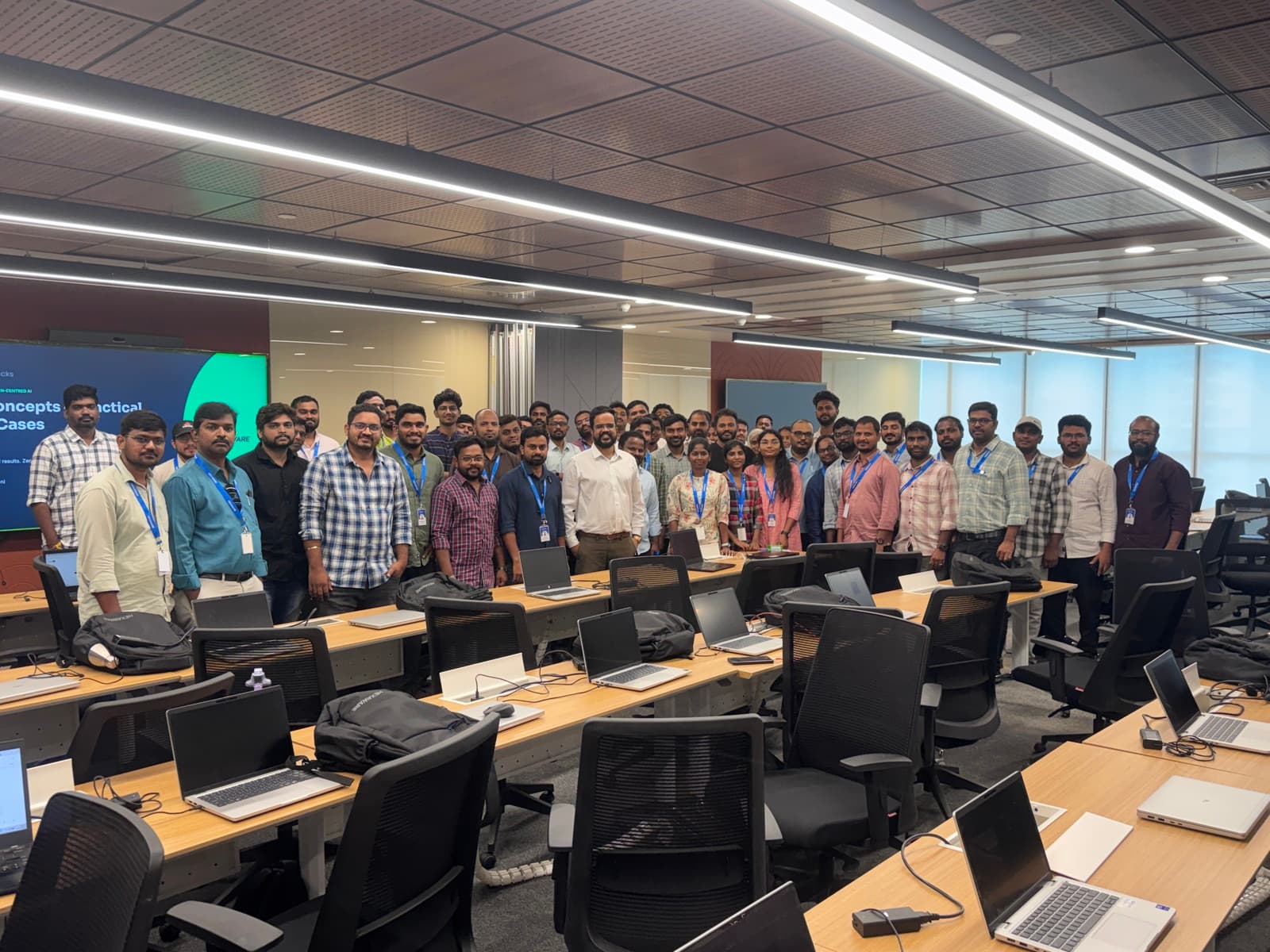
1,000+
Business professionals enabled
5 Stages
Understand → Discover → Design → Build → Apply
5-Pillar
Feasibility model for agent decisions
6-Part
Agent design framework (Goal → Feedback)
The Challenge
What was happening before Synottic
AI tools were already familiar, but the organization did not want another traditional AI training program. It wanted people who could think with AI, identify opportunities, and participate directly in AI transformation — not just use it.
- Could non-technical professionals understand how AI agents actually work?
- Could they identify meaningful Agentic AI opportunities in their own processes?
- Could they create agents themselves, without writing code?
The Synottic Approach
What had to change
Rather than teaching Agentic AI as a technical subject, Synottic translated the underlying concepts into a business-friendly experience: what an agent is, how it differs from automation and GenAI, how it reasons and acts, where it needs human oversight, and how to design and build one using natural language.
Understand → Discover → Design → Build → Apply
01
People understood how AI agents work
Participants explored the evolution from automation to GenAI to Agentic AI and could explain the basic mechanics: Goal → Reason → Decide → Act → Learn — creating a common foundation across technical and non-technical teams.
02
People identified real business opportunities
Using a Spot → Validate → Prioritise framework, participants examined their own processes for places agents could improve speed, decision-making, exception handling, customer experience, or efficiency — producing use cases connected to their real business context, not hypothetical ideas.
03
People learned when an agent was actually appropriate
A five-pillar feasibility model — Data Readiness, Process Maturity, System Landscape, Risk & Compliance, Business Value — helped participants distinguish between building an agent, redesigning the process, simplifying before automation, or keeping a human in the loop.
04
People designed the agent
A six-component framework — Goal → Inputs → Decisions → Tools → Guardrails → Feedback — translated agent architecture into language business professionals could use directly.
05
Non-technical participants built agents
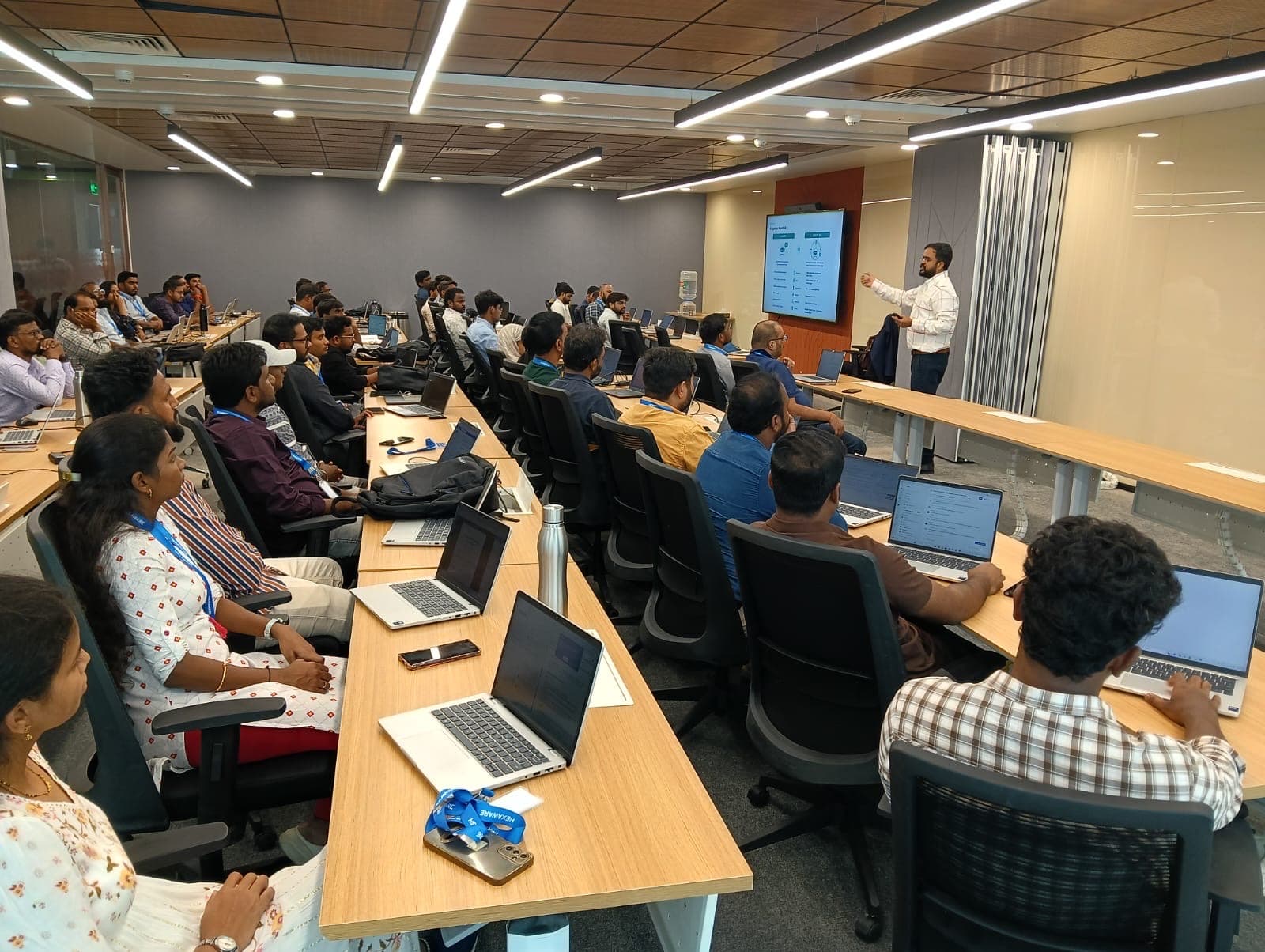
Participants were not expected to become programmers. An applied session showed them how to define and create an AI agent using natural language — moving from 'I have an AI idea' to 'I can actually build an AI agent for this task.'
Signature Moment
From idea to working agent, in natural language
The most important shift in the program came when participants built a first AI agent for a real task using natural language alone — no coding. That applied session, paired with demonstrations and real-world agent scenarios, was what turned Agentic AI from an abstract concept into something business professionals could point to and say they had built.
Evidence
Program scope, not a satisfaction score
The engagement reached 1,000+ business professionals and produced a repeatable method for spotting, evaluating, designing, and building agents — not just a single workshop.
1,000+ non-technical business professionals across the organization
A five-pillar feasibility model for deciding when an agent is the right answer
A six-component framework for designing agent logic and workflow
An applied, hands-on session building a first AI agent in natural language
Before → After
What actually changed
| Before | After |
|---|---|
| AI is something technical teams do | AI is something business teams can participate in |
| People consume AI awareness sessions | People understand how agents work |
| AI opportunities are difficult to identify | People can identify use cases in their own processes |
| Agentic AI feels complex | Agentic AI becomes understandable |
| Ideas remain theoretical | Participants design practical agent workflows |
| Building agents requires coding expertise | Non-technical teams can create agents using natural language |
Artifacts
What the engagement actually produced
- Agentic AI use cases connected to real business context
- Five-pillar feasibility assessments (Data, Process, Systems, Risk, Value)
- Agent design specifications (Goal → Inputs → Decisions → Tools → Guardrails → Feedback)
- First working AI agents, built in natural language, for real business tasks
Human Impact
What changed for people, not just process
Participants moved from consuming AI awareness sessions to actively shaping how AI shows up in their own processes — evaluating feasibility, designing agent logic, and building a working first agent themselves, without writing code.
The Synottic Lens
What this demonstrates about AI transformation
The biggest barrier to enterprise AI transformation is not always technology. It is often the gap between people who understand the business and people who understand the technology. Making Agentic AI understandable and buildable for non-technical professionals closes that gap.