Loading…
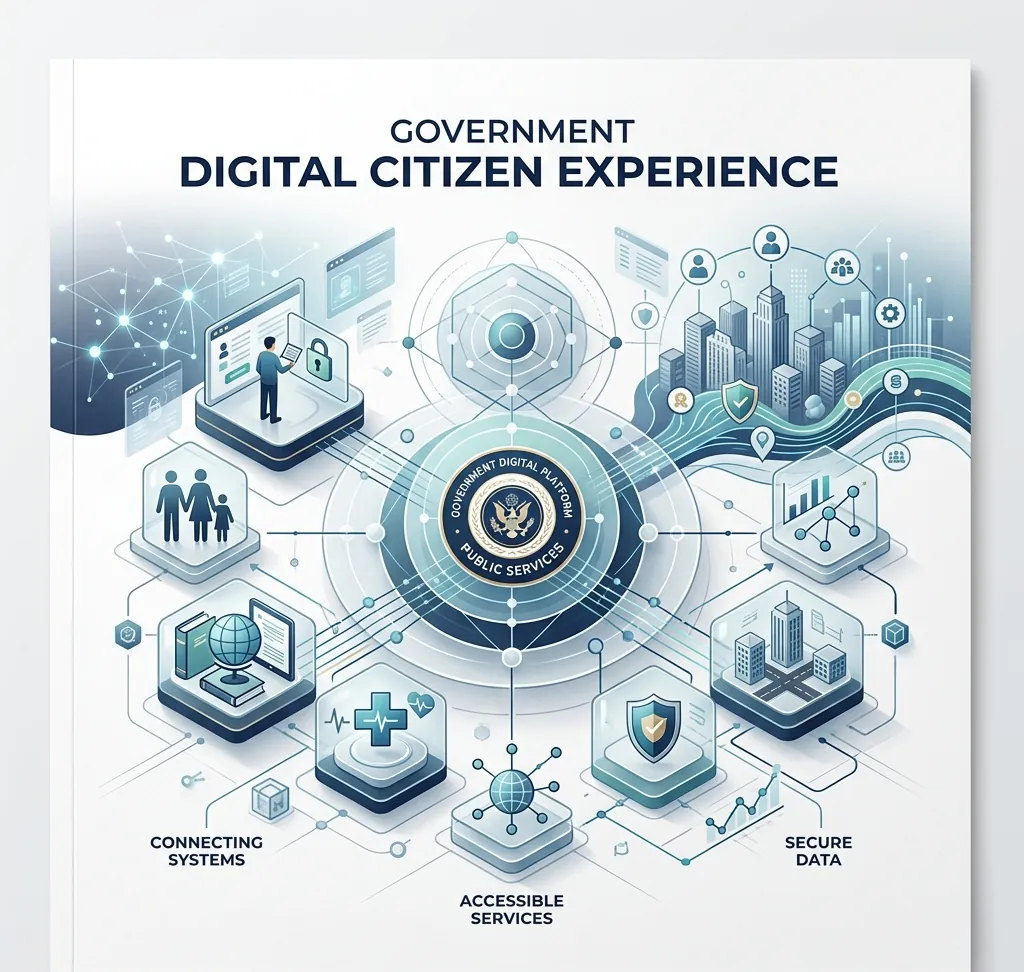
The Context Shaping Government & Public Sector
Understanding the macro trends and digital priorities driving the need for AI transformation in your sector.
Industry Trends
- Modernization of legacy IT systems
- Adoption of conversational AI for public portals
- Data-driven policymaking and urban planning
- Heightened focus on ethical AI and algorithmic bias
Digital Priorities
- Improving the digital citizen experience (CX)
- Enhancing cybersecurity postures across agencies
- Establishing centralized data lakes for cross-agency sharing
- Developing strict AI governance and procurement standards
AI Maturity
AI maturity in the public sector varies significantly. Defense and intelligence agencies often lead in advanced AI applications, while civilian agencies are primarily focused on basic automation, data analytics, and improving citizen service portals.
The Challenges Shaping the Future of Government & Public Sector
Strategic barriers preventing organizations from scaling effectively, which AI is uniquely positioned to solve.
Data Silos
Critical data is often trapped within disconnected legacy systems across different agencies.
Procurement Bureaucracy
Lengthy and complex procurement processes slow down the adoption of modern AI technologies.
Public Trust & Ethics
Citizens are concerned about surveillance, data privacy, and algorithmic bias in government decisions.
Talent Retention
Government agencies struggle to compete with the private sector for top AI and data engineering talent.
Where AI Creates the Greatest Business Impact
How enterprise AI capabilities directly address your core challenges to unlock new value and operational efficiency.
Enhanced Citizen Services
Providing 24/7 multilingual support and streamlined access to public services via AI.
Smart Cities
Using IoT and AI to optimize traffic flow, public transport, and energy consumption.
Fraud & Abuse Prevention
Identifying fraudulent claims in public benefit programs, saving taxpayer money.
Predictive Public Health
Analyzing epidemiological data to forecast disease outbreaks and allocate resources efficiently.
High-Value AI Use Cases Across the Government & Public Sector Value Chain
Proven applications driving measurable business value, efficiency, and transformation in Government & Public Sector.
1AI-Powered Citizen Virtual Assistants
The Problem
Citizens struggle to navigate complex government websites and wait on hold for hours to get basic information.
The Outcome
24/7 access to information, reduced call center volume by 40%, and improved citizen satisfaction.
Example Workflow
Multilingual conversational AI deployed on government portals answers FAQs, guides users through forms, and schedules appointments.
2Benefit Fraud Detection
The Problem
Billions of dollars are lost annually to fraudulent claims in unemployment, healthcare, and tax systems.
The Outcome
Significant reduction in improper payments and recovery of taxpayer funds.
Example Workflow
Machine learning models analyze claim patterns and cross-reference multiple databases to flag highly suspicious applications for human review.
3Traffic and Infrastructure Optimization
The Problem
Urban congestion leads to pollution, lost productivity, and increased wear on infrastructure.
The Outcome
15-20% reduction in traffic congestion and optimized maintenance budgets.
Example Workflow
Computer vision analyzes live traffic camera feeds to dynamically adjust traffic light timings and predict road maintenance needs.
4Predictive Policing and Resource Allocation
The Problem
Law enforcement resources are stretched thin and often deployed reactively.
The Outcome
Reduced crime rates and more efficient deployment of officers.
Example Workflow
AI analyzes historical crime data, weather, and local events to forecast hotspots, allowing police to patrol proactively (requires strict ethical oversight).
5Automated Document Processing (Intelligent Document Processing)
The Problem
Government agencies process millions of paper forms and physical mail, leading to massive backlogs.
The Outcome
Processing times reduced from weeks to days, freeing up civil servants for higher-value work.
Example Workflow
OCR and NLP automatically extract data from citizen applications (e.g., passports, permits) and route them to the correct department.
6Public Health Surveillance & Forecasting
The Problem
Traditional public health reporting is slow, making it difficult to respond to rapid outbreaks.
The Outcome
Early detection of disease clusters and optimized distribution of medical supplies.
Example Workflow
AI models analyze hospital admissions, pharmacy sales, and social media signals to predict outbreaks of flu or other infectious diseases.
7Tax Evasion Detection
The Problem
Manual auditing can only cover a tiny fraction of tax returns, leaving substantial tax gaps.
The Outcome
Increased tax revenue collection and fairer enforcement.
Example Workflow
Advanced graph analytics and AI identify complex networks of shell companies and anomalous deduction patterns to target audits effectively.
8Disaster Response and Relief Optimization
The Problem
During natural disasters, it is difficult to quickly assess damage and deploy resources where they are most needed.
The Outcome
Faster emergency response times and targeted relief efforts.
Example Workflow
AI analyzes satellite imagery and drone footage to instantly assess structural damage after a hurricane or earthquake.
9Policy Impact Simulation
The Problem
Policymakers often lack the tools to accurately predict the economic or social impact of proposed legislation.
The Outcome
More effective, data-driven policymaking with fewer unintended consequences.
Example Workflow
Machine learning simulations model the downstream effects of tax changes, zoning laws, or public transit expansions based on historical data.
10Cybersecurity Threat Intelligence
The Problem
Government networks are prime targets for nation-state cyberattacks and ransomware.
The Outcome
Enhanced protection of sensitive national data and critical infrastructure.
Example Workflow
AI monitors network traffic across federal agencies to detect and neutralize zero-day exploits and advanced persistent threats (APTs).
11Energy Grid Management (Smart Grid)
The Problem
Aging power grids struggle to integrate renewable energy sources and manage peak demand.
The Outcome
Reduced energy waste, fewer blackouts, and accelerated transition to renewables.
Example Workflow
AI predicts energy consumption patterns and dynamically balances loads across the grid to accommodate wind and solar fluctuations.
12Automated Redaction of Public Records
The Problem
Fulfilling Freedom of Information Act (FOIA) requests is slow due to the manual redaction of sensitive information.
The Outcome
Faster FOIA compliance and lower administrative costs.
Example Workflow
NLP models automatically scan documents and redact PII, classified information, and sensitive data before public release.
Risk & Governance
Building Responsible and Trusted AI
AI governance in the public sector is arguably the most critical of any industry. Governments must ensure absolute transparency, fairness, and accountability. Any AI system used for decision-making (e.g., justice, benefits) must be rigorously audited for algorithmic bias to maintain public trust. Synottic's Responsible AI frameworks ensure that your deployments meet critical standards for security, privacy, and fairness.
Executive Order on Safe, Secure, and Trustworthy AI (US)
EU AI Act
NIST AI Risk Management Framework
FedRAMP (Federal Risk and Authorization Management Program)
How Synottic Helps
- 1
AI Readiness Audit
We assess your data infrastructure and governance posture against Government & Public Sector regulatory standards.
- 2
Guardrails Implementation
Deploy enterprise guardrails to prevent data leakage, bias, and hallucination.
- 3
Continuous Monitoring
Automated drift detection and bias auditing for production models to ensure ongoing compliance.
Your Recommended AI Capability Journey
A structured capability-building roadmap tailored for Government & Public Sector professionals, from foundational literacy to enterprise-scale AI implementation.
1
Phase 1
Build Foundations
Understand AI terminology, concepts, and responsible use cases specific to Government.
AI Literacy Essentials
1 - 3 Days
Skills Acquired
- Explain core AI concepts in simple business language
- Distinguish AI assistants, copilots, automation and agents
- Write effective prompts using structured frameworks
View Program
Generative AI Essentials
1 - 3 Days
Skills Acquired
- Explain Generative AI in practical business terms
- Understand LLMs and foundation models conceptually
- Select an appropriate AI tool for a given task
View Program
2
Phase 2
Develop Practical Skills
Master generative AI tools to improve daily productivity and communication in Government.
3
Phase 3
Apply AI
Apply AI to function-specific workflows, operations, and strategic planning within Government.
AI for Operations & Supply Chain
1 - 3 Days
Skills Acquired
- Understand AI concepts and practical applications in operations
- Use AI assistants to automate operational activities
- Improve demand forecasting and inventory planning
View Program
AI for Marketing
1 - 3 Days
Skills Acquired
- Understand AI applications across marketing functions
- Use AI assistants to improve daily marketing productivity
- Create effective prompts for content and campaigns
View Program
AI for Customer Service
1 - 3 Days
Skills Acquired
- Apply AI confidently across the customer service lifecycle
- Deliver faster, more personalized customer support
- Reduce response and resolution times using AI assistants
View Program
4
Phase 4
Govern & Scale
Deploy and govern secure, agentic AI systems that comply with Government regulations.
Responsible AI Essentials
1 - 3 Days
Skills Acquired
- Apply Responsible AI principles in everyday work
- Identify and mitigate AI risks
- Evaluate AI systems for fairness and transparency
View Program
AI Agents Essentials
1 - 3 Days
Skills Acquired
- Understand enterprise Agentic AI architectures
- Design AI agent workflows
- Connect AI agents to enterprise systems
View Program
5
Phase 5
Enterprise Capability
Scale AI adoption and build internal capability across your entire Government organization.
The Synottic Transformation Journey
A structured pathway from discovery through to continuous business value, ensuring lasting impact.
1
Discovery
2
Strategize
3
Enable
4
Govern
5
Deploy
6
Scale
How Synottic Helps You Succeed
End-to-end consulting and implementation services designed specifically for Government & Public Sector.
AI Readiness Assessment
Measure organisational AI maturity and identify strategic capability gaps.
AI Strategy
Align AI initiatives with business goals and operational priorities to maximize ROI.
Executive Advisory
Support senior leaders with AI strategy and long-term transformation planning.
Capability Building
Train your workforce with tailored, role-based AI enablement programs.
Responsible AI & Governance
Establish policies, controls, and ethical frameworks to mitigate AI risks.
Agentic AI & Implementation
Design and deploy autonomous AI agents for complex enterprise processes.
Frequently Asked Questions
AI can drastically improve CX by providing 24/7 conversational interfaces for inquiries, accelerating the processing of applications (like permits or benefits) through automated document processing, and personalizing digital government portals.